
Cut on it. Serve on it. Leave it out.
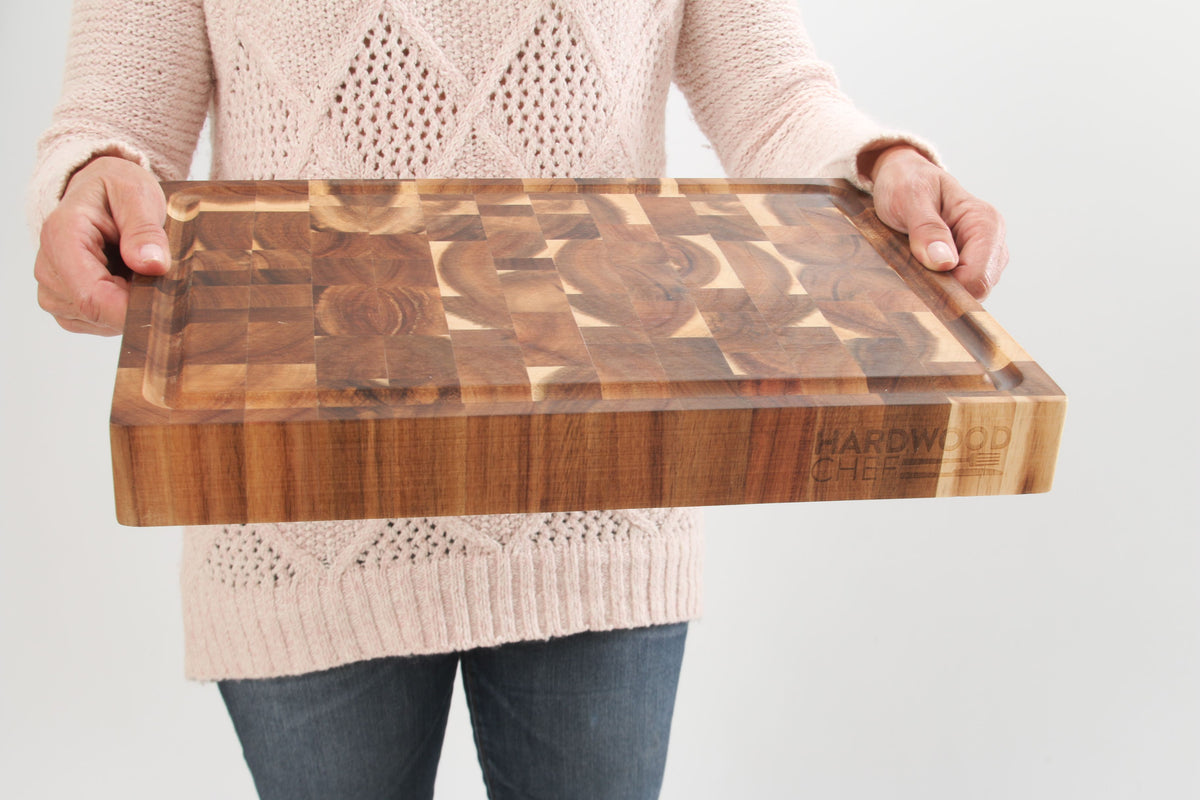
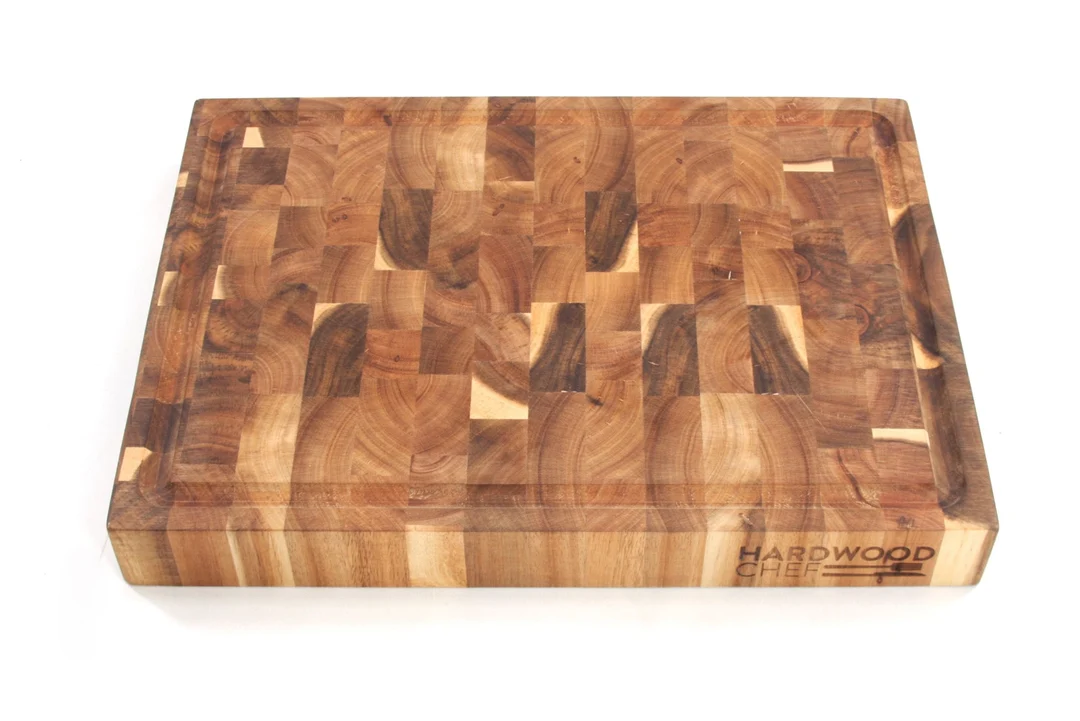
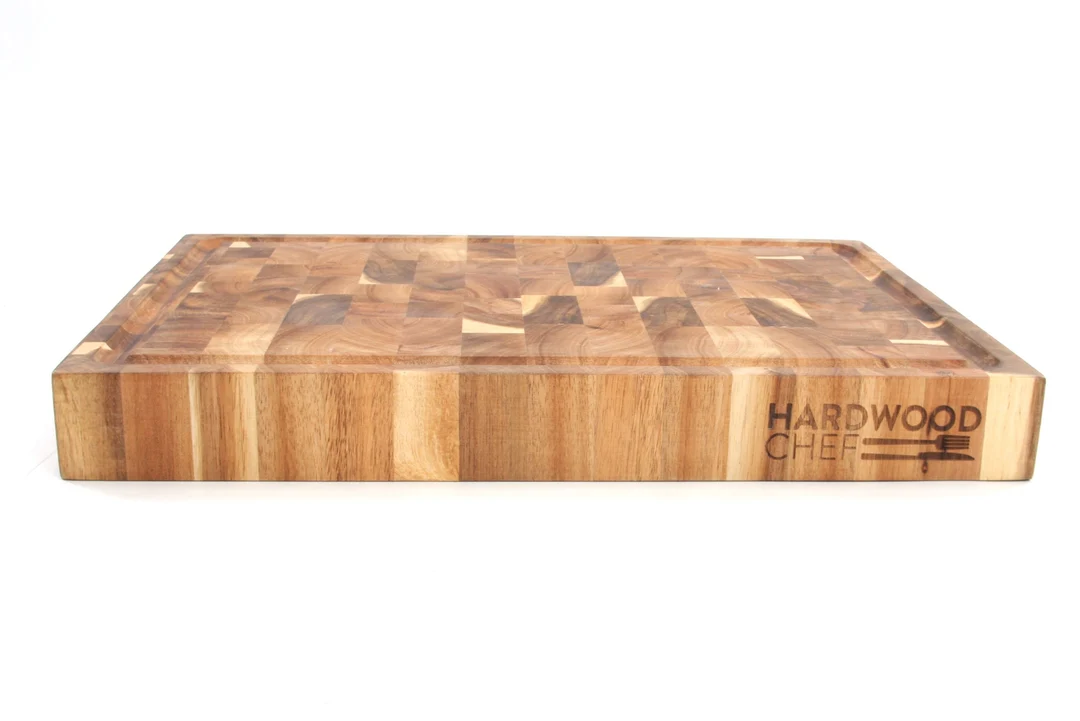
A nearly two-inch-thick end grain board in Malaysian acacia, heavy enough to stay put while you carve and handsome enough to carry straight to the table.
Or 4 interest-free installments with Shop Pay
- Ships in 5-8 Days within the US
- 30-day returns
- Secure checkout through Shopify
 Designed by founder Jonathan Bruce
- 16 × 12 × 1¾ in, 6.2 lb
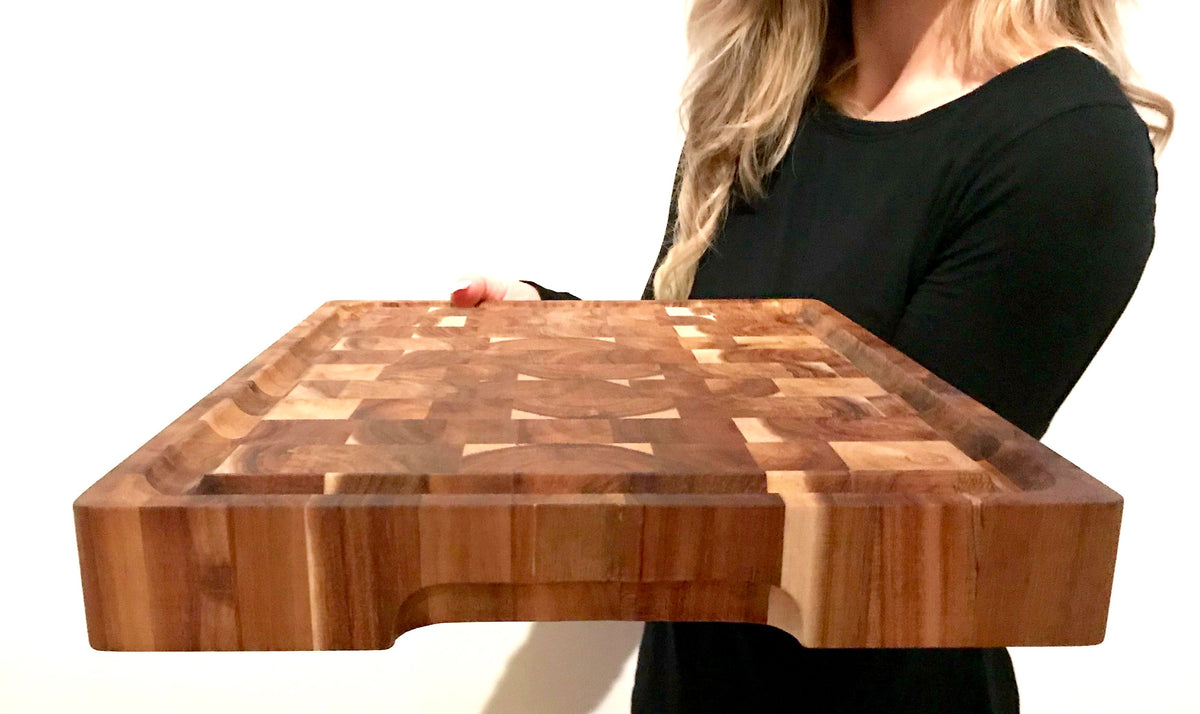
- Juice groove keeps counters clean
- No plastic to shed into food
- Won't dull good knives
Your knife cuts between the fibers, not across them.
End grain boards are built from short blocks of wood set on end, so the surface you cut on is the tips of the wood fibers. A blade slips between them instead of slicing through, which is easier on the edge and leaves fewer deep scars in the board.
What's coming off your cutting board?
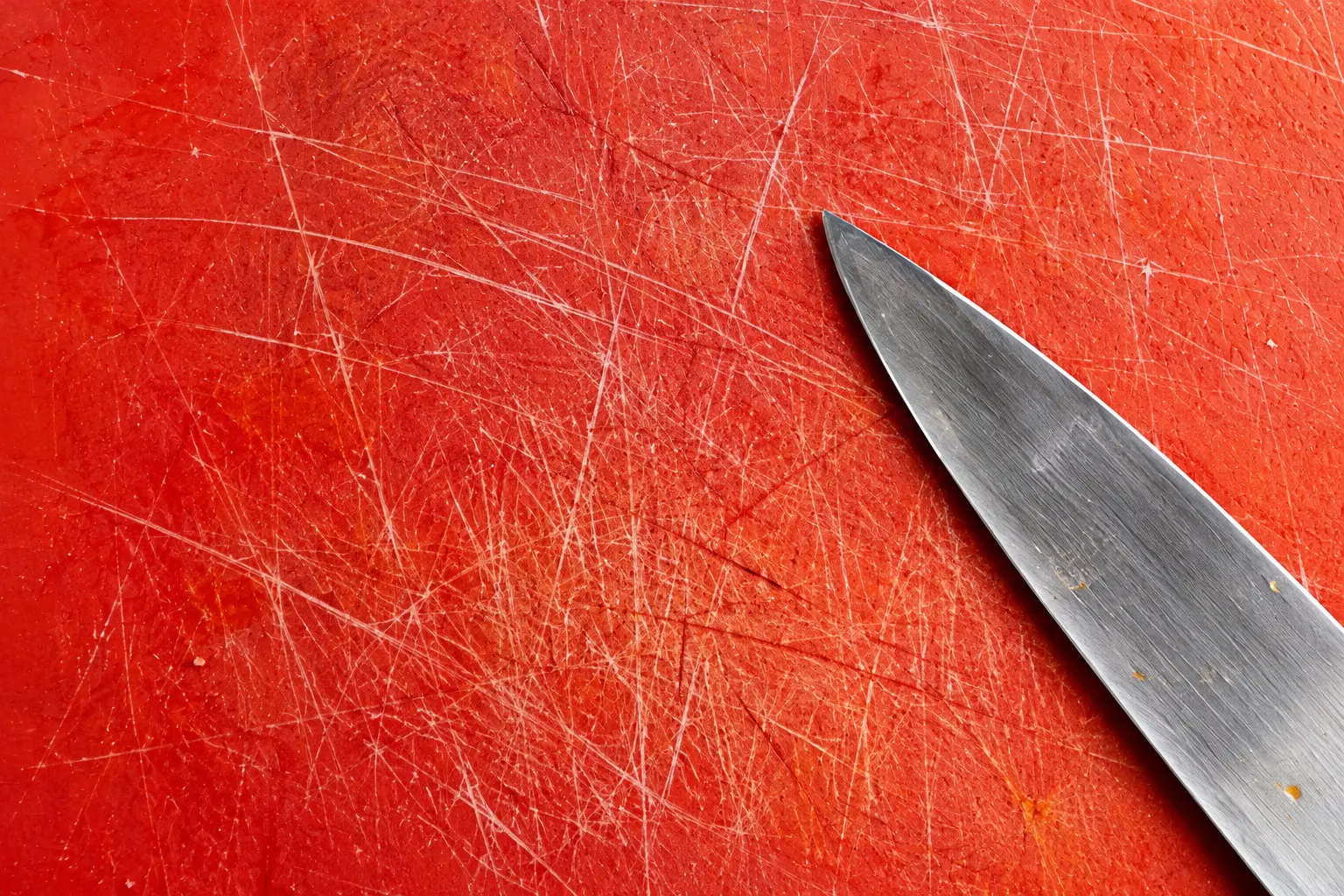
Every cut leaves a mark. On plastic, those marks turn into loose particles in your food and grooves that soap can't reach.
That's how many microplastic particles researchers estimated a polypropylene cutting board can release into food in a year of normal chopping. Polyethylene boards, the other common kind, came in at 14 to 71 million.
Source: "Cutting Boards: An Overlooked Source of Microplastics in Human Food?" Environmental Science & Technology, 2023.
The grooves are the real problem
When food safety researchers at UC Davis compared used boards, the knife-scarred wood behaved almost like new wood. Knife-scarred plastic was impossible to clean and disinfect by hand, especially with chicken fat in the cuts.
End grain works differently. The knife slips between the wood fibers, which close back up after the blade lifts, so the board doesn't build up the deep, fraying grooves plastic does.
Source: Dean O. Cliver, Ph.D., Food Safety Laboratory, University of California, Davis.
See how your board compares
- When you cut
- The blade gouges the surface and sheds microplastic particles.
- Your knives
- Fair. Better than glass, harder on edges than end grain wood.
- Over time
- Knife grooves deepen, hold residue, and can't be fully cleaned by hand.
- When you cut
- Bamboo is a grass, pressed into strips and glued together into a board.
- Your knives
- Hard on edges. The dense, silica-rich fibers dull blades faster than hardwood.
- Over time
- Thin boards can split along the glue lines and warp after washing.
- When you cut
- The blade hits a surface harder than steel and skids instead of biting in.
- Your knives
- The worst choice. Glass rolls and chips a sharp edge quickly.
- Over time
- Slippery when wet, so food and knives slide around while you work.
- When you cut
- The blade parts the end grain fibers. There's no plastic to shed.
- Your knives
- The gentlest common cutting surface for a sharp edge.
- Over time
- Fibers close back up. A little mineral oil keeps it looking new for years.
Signs it's time to retire your old board
- Deep grooves you can feel with a fingernail
- A fuzzy or frayed surface where the knife lands most
- Stains or smells that stay after washing
- Warping, so it rocks on the counter
If your plastic board has any of these, it's shedding more and cleaning worse than it did new.
| Feature | This acacia board | Plastic | Bamboo | Glass |
|---|---|---|---|---|
| Sheds microplastics | No, solid wood | Yes | No | No |
| Easy on knife edges | Yes, end grain | Fair | Tough on edges | Dulls blades fast |
| Cleans well once scarred | Yes | No | Fair | Doesn't scar |
| Doubles as a serving platter | Yes | No | Sometimes | Rarely |
| Stays put while you carve | 6.2 lb, nearly 2 in thick | Slides | Usually light | Slides |
A note on wood: every cutting board sheds a little as you use it, wood included. The difference is that what comes off this board is natural wood fiber, not plastic.
What the research and reporting say
Plastic in the kitchen has gone from a niche worry to a regular news story. Here's where the facts on this page come from.
- American Chemical SocietyResearchers estimate that chopping on plastic boards can put tens of millions of microplastic particles into food each year.June 2023
- NPRChefs and a UC San Francisco microplastics researcher explain why they've swapped plastic cutting boards for wood.May 2025
- SnopesFact check confirms the claim that plastic cutting boards shed microplastics into food is true, based on the 2023 study.Fact check
- National GeographicA study in Nature Medicine found microplastics in human brain tissue, at higher levels in 2024 samples than in 2016 samples.February 2025
These outlets reported on the research. They haven't reviewed or endorsed HardwoodChef products.
One board, two jobs.
In the kitchen
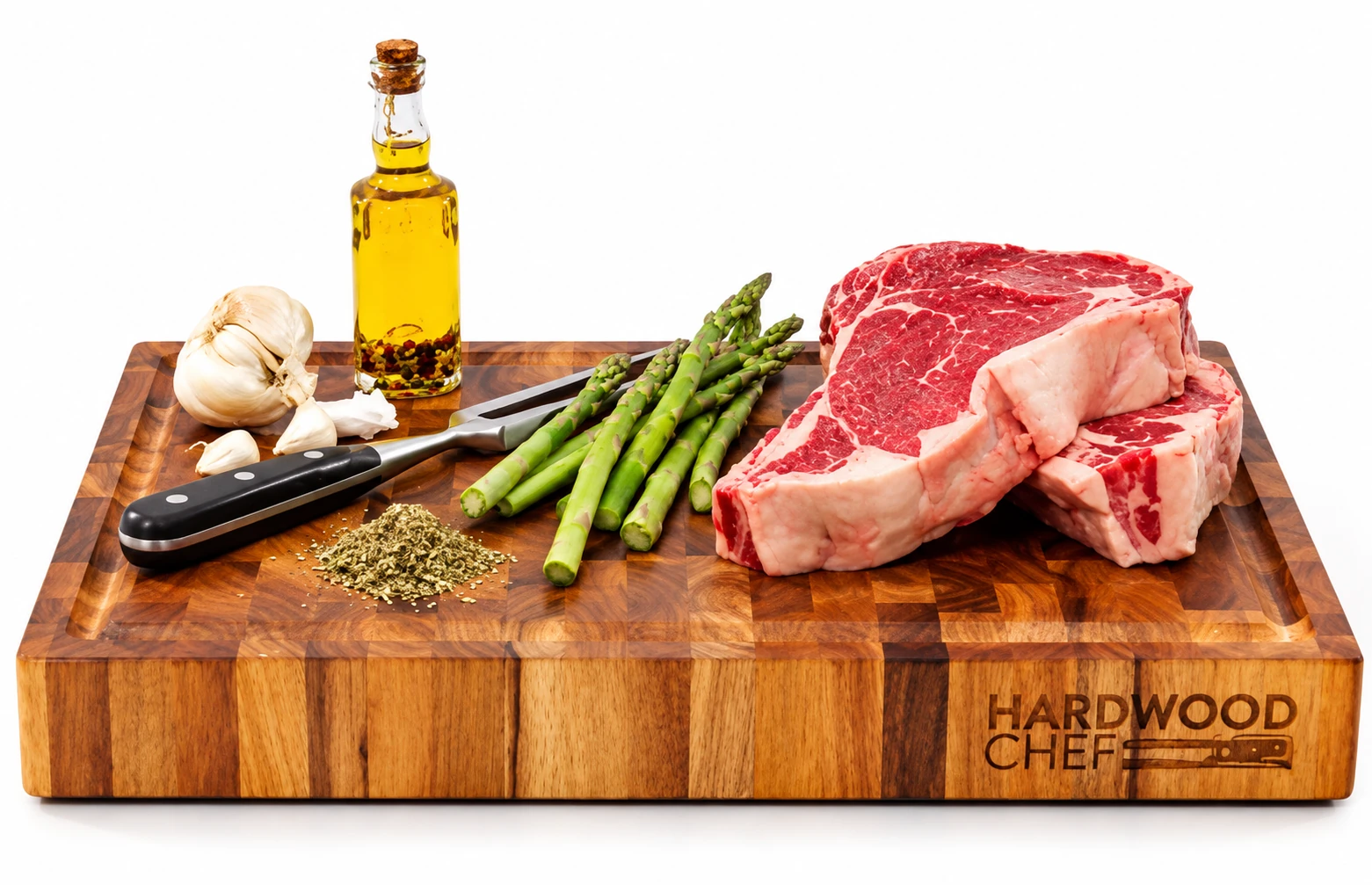
- Carve roasts and break down chicken without the board shifting
- Chop herbs and vegetables with less wear on your knives
- Thick enough to protect your countertops from every cut
On the table
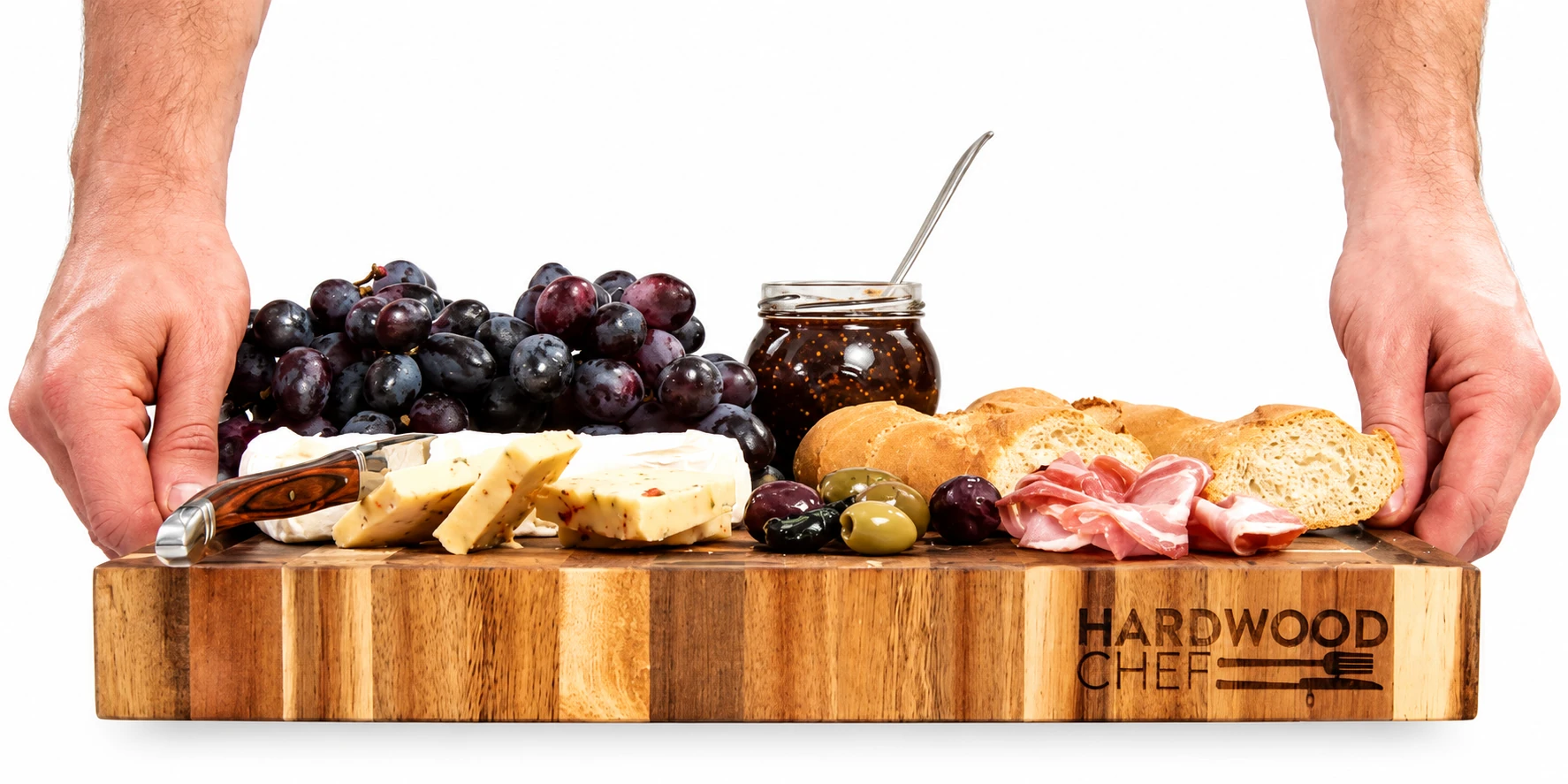
- Build a cheese and charcuterie spread for guests
- Lay out sliced fruit, bread, and spreads
- Rest a hot roast on it straight from the oven
Arrives ready to give.
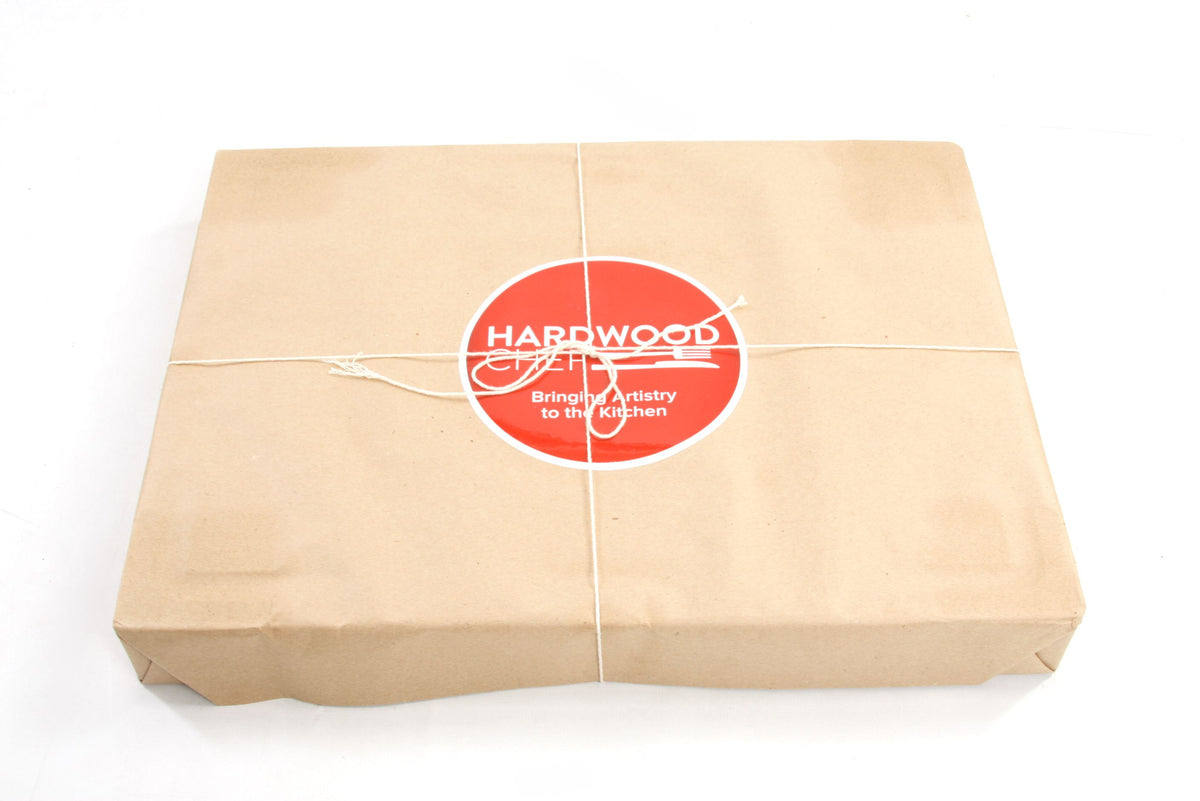
Each board ships wrapped in authentic butcher paper and tied with string, so there's nothing left to do but hand it over. It's the kind of gift that gets used every week and still looks good years later.
- Weddings
- Housewarmings
- Holidays
- Anniversaries
- Anyone who loves to cook
Made for the table where everyone lingers.
I grew up in suburban New Jersey, until my dad, a government scientist, moved our family to Germany. Overnight, my idea of food changed. I spent my youth wandering old-world butcher shops and French markets with entire aisles devoted to fresh fish and aged cheese.
The food was unforgettable. But what stayed with me most was who I shared it with. Old friends, total strangers, a spread of cheese and charcuterie, a carafe of local wine. Somehow, everything that separated us disappeared at that table.
HardwoodChef started with one idea: make the board that sits at the center of those moments. Thick enough to carve on, kind to the knives you've invested in, and beautiful enough to carry straight to the table. Acacia gains character the more you use it, so the board you unwrap is only the beginning.
“Food brings people together. I wanted to make something worthy of sitting in the middle of it.”
Jonathan Bruce
Founder, HardwoodChef
Questions about your board? Email me directly at jonathan@hardwoodchef.com
The details.
- Dimensions
- 16 × 12 × 1¾ inches
- Weight
- 6.2 lbs
- Wood
- Premium Malaysian acacia, end grain construction
- Finish
- Preconditioned with food-safe mineral oil
- Features
- Juice-catching groove, finger grips on the sides
- Packaging
- Butcher paper wrap tied with string
Keeping it looking new
- Wash by hand with warm, soapy water and dry it standing on its edge.
- Rub in a little mineral oil about once a month, or whenever it looks dry.
- Keep it out of the dishwasher and never leave it soaking in the sink.
Questions before you order
Don't wooden boards hold more bacteria than plastic?
That was the old assumption, but lab research at UC Davis found the opposite once boards had been used. Knife-scarred wood behaved almost like new wood, while knife-scarred plastic couldn't be fully cleaned and disinfected by hand.
Does a wood board shed particles too?
Every cutting board wears a little with use. The difference is that a wood board sheds natural wood fiber, not plastic, and end grain wears more slowly because the knife parts the fibers instead of slicing across them.
Will it dull my knives?
No. On an end grain board the blade slides between the wood fibers rather than cutting across them, which is much gentler on the edge than glass, stone, or hard plastic.
Can I put it in the dishwasher?
No wooden board should go in a dishwasher. The heat and water can warp or crack it. Hand wash, dry it upright, and oil it occasionally.
Is it safe to serve food directly on it?
Yes. It's finished with food-grade mineral oil and is designed to go from cutting to serving. Cheeses, fruit, bread, and hot roasts all work.
Is it too heavy to carry?
At 6.2 pounds it's solid but manageable, and the finger grips on the sides make it easy and safe to carry from counter to table.
Does it come gift wrapped?
Every board arrives wrapped in butcher paper and tied with string, so it's ready to give as it is.
A board you'll reach for every day.
16 × 12 × 1¾ inches of end grain acacia, now $119 instead of $179.
Add to cart for $119Or 4 interest-free installments with Shop Pay
- Ships in 5-8 Days within the US
- 30-day returns
- Secure checkout through Shopify